


SaaS
Positioning, product marketing and lifecycle growth for software teams; where the website is the first onboarding screen and the trial decides everything after it.
The reality
Software sells itself only in the pitch deck. In
the market a buyer compares five tabs in ten
minutes and picks the one they understood
fastest, not the one with the longest
feature list; clarity converts better than
capability nobody can find.
Growth is not one funnel but three: acquisition, activation and expansion. Most SaaS marketing is built for the first and quietly starves the other two.
What we solve
Positioning nobody remembers
A category, a claim and a proof set your own team can repeat. If the sales call has to explain the homepage, the positioning is not finished.
Trials that never activate
Onboarding, empty states and in-product copy designed as carefully as the marketing site, because the first session decides the subscription.
The site and the product disagree
One design system across the site, the app and the deck, so what a buyer is sold is what they log in to.
Growth stalls after launch
Lifecycle content, comparison pages and search built for the terms buyers use once they are already evaluating alternatives.
Services that move this sector
Where we start.
Proof in this sector
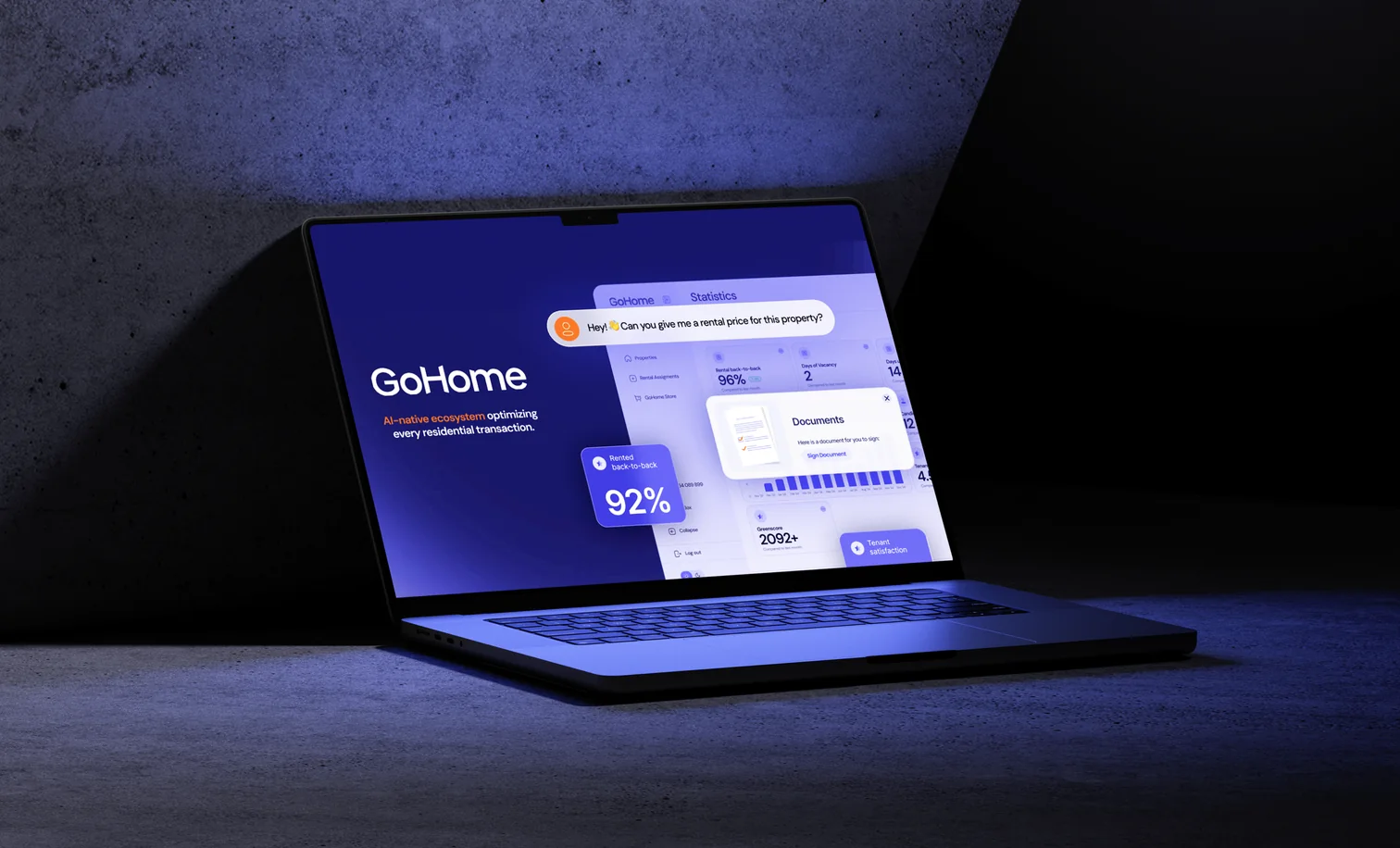
GoHome
An AI-powered rental platform given a brand system to match; identity, product storytelling and the collateral the team sells with.
Read the case study↗
More projects
in this space.
Sector-relevant work and adjacent projects where the same playbook applied.

FAQ.
What does a SaaS engagement usually include?

Positioning and messaging first, then the marketing site, onboarding and lifecycle content, and the search and paid engine that feeds trials. Most teams start with positioning and the site, then add lifecycle once the funnel is instrumented.
Do you work inside the product as well as the website?
We design the parts a customer reads: onboarding, empty states, pricing and upgrade screens, and in-product copy, against whatever stack you run. Activation is where most SaaS marketing spend quietly leaks away.
How do you handle comparison and competitor content?
Honestly, and with your own data. Comparison and alternative pages carry some of the highest-intent traffic in SaaS, and they only work if a buyer can tell you have not stacked the table in your favour.
How long before we see results?
Three to five weeks for positioning and messaging, four to eight for the site, and search compounds from month three. Paid can start the week the site is live, provided the funnel is instrumented.